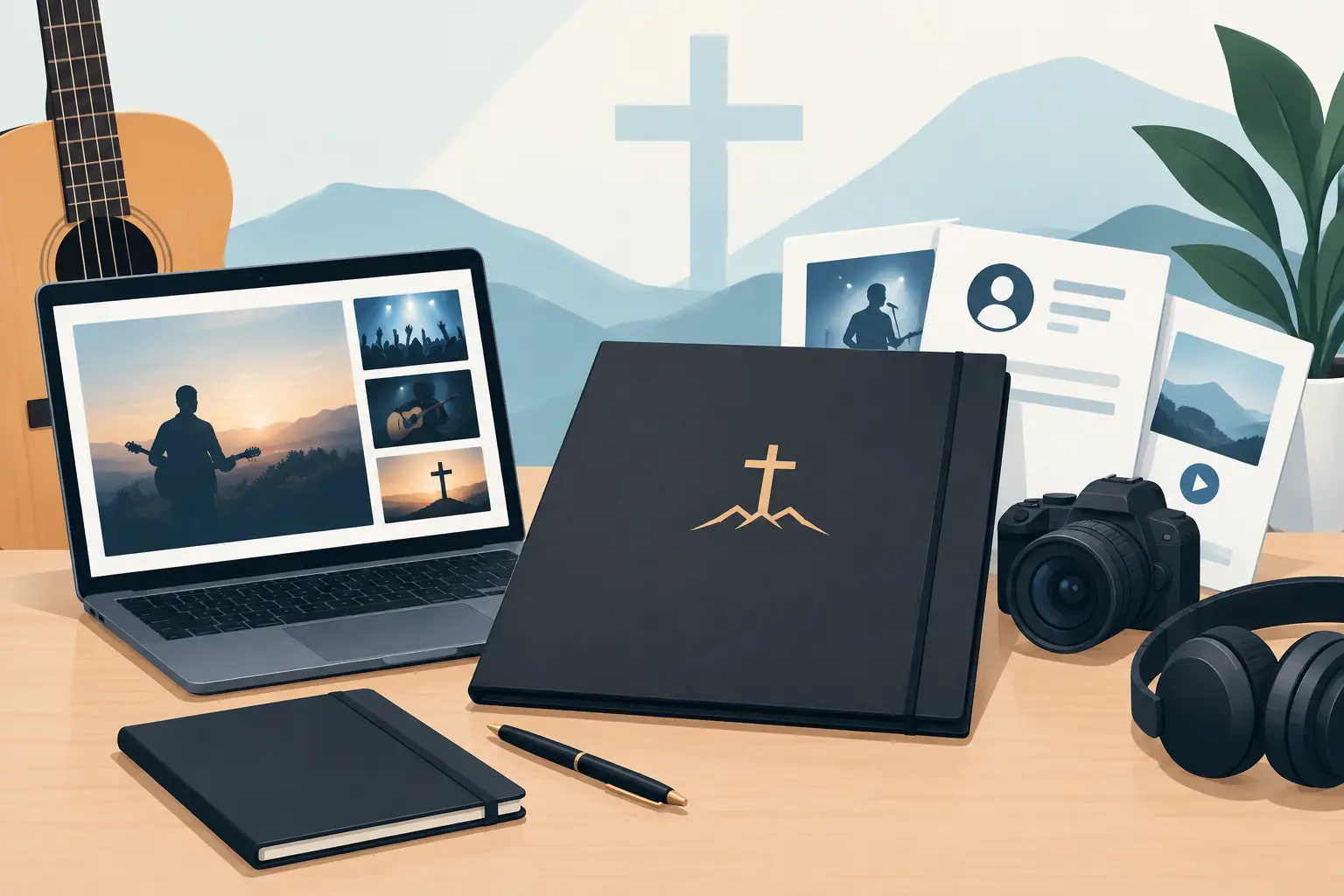
A radio programmer may have only a few minutes between music logs. A journalist may be working toward a same-day deadline. A venue booker may be comparing several artists before lunch. Your Christian artist electronic press kit should make it easy for each person to understand your music, your message, and the next step.
An EPK is not a scrapbook, a full autobiography, or a page filled with every song you have ever released. It is a focused professional introduction. For an independent Christian artist, it also carries a responsibility: present the work with honesty, communicate the faith and values behind it clearly, and let the music speak without forcing a sales pitch.
What a Christian Artist Electronic Press Kit Must Do
A strong EPK answers the questions industry contacts are already asking. Who is this artist? What kind of music do they make? Is there a current release or a clear reason to cover, play, book, or interview them? Where can I hear the best material? How do I reach the right person?
That may sound simple, but many artist press kits lose momentum by making visitors hunt for those answers. An industry contact should not need to scroll through a long personal history to find a current single, a usable photo, or an email address. The clearer the path, the more professional the artist appears.
For faith-centered music, clarity matters even more. “Christian artist” can describe worship music, contemporary pop, Christian rock, gospel, country, children’s music, Bible storytelling, or a songwriter whose lyrics are grounded in Christian values. State your lane in plain language. If your sound moves between rock, blues, country, pop, and worship, say so. The right people need enough detail to place your music, not a vague label that could mean anything.
Start With a Short, Current Artist Bio
Your bio is the center of the press kit, but it should not try to tell your entire life story. A useful short bio is generally two or three concise paragraphs. Open with who you are, what you create, and the musical identity people will hear. Then give context about your songwriting, current project, live performance, or artistic direction.
Write in third person for easy reuse by radio hosts, writers, and event promoters. Rather than saying, “I have always loved music,” lead with an identifiable statement: “Devon Capman records original guitar-driven music that brings together rock, pop, blues, country, worship, and Bible-based storytelling.” That gives a reader something they can use immediately.
The best biographies include conviction without exaggeration. If you are an independent artist who directs the lyrics, arrangements, production decisions, and creative vision, say so. Artist ownership is meaningful. But avoid claims such as “the most important new voice in Christian music” unless they are supported by credible recognition. A sincere, specific bio builds more trust than a string of superlatives.
Keep a longer biography available if your story truly needs it, especially if a publication has requested deeper background. Still, the main EPK should lead with the shorter version. It respects the reader’s time and helps them pull an accurate description quickly.
Lead With the Music You Want Heard Now
An EPK should feature a small number of priority tracks, not an endless catalog. Choose one current single, one representative song, and, if helpful, one track that shows another side of your sound. A worship song, a guitar-led rock track, and a Bible Rock song may each serve a different contact, but they need a clear reason for being there.
Introduce each selection with one sentence of context. Mention the release date, the genre, and the heart of the song. For example, a track may be written for worship, built around a Scripture-centered story, or intended as an encouraging message for families. This context helps a writer frame the song and helps a programmer decide whether it suits their audience.
Use finished recordings when possible. A demo can belong in an EPK when it represents an upcoming project or when you are seeking collaborators, but label it honestly. Do not present an early working mix as a final release. Transparency strengthens professional relationships and leaves room for people to follow the project as it develops.
Give Media and Bookers Usable Visual Materials
Photos are not decoration. They are working assets for articles, event listings, social posts, and radio websites. Include a small set of current, high-resolution artist images that reflect the music and the setting in which you want to be seen.
A solo artist often needs at least one close portrait, one performance image, and one landscape-oriented photo with open space for publication text. Keep the visual style consistent with the project. A worship release may call for a more reflective image, while a rock or Americana-influenced release may benefit from a performance-focused setting. Neither approach is automatically better. It depends on the music, the audience, and the opportunity.
Do not rely on heavily filtered images, low-resolution screenshots, or photos that no longer resemble your current appearance. A press contact needs confidence that the image represents the artist they are covering or booking now.
Make Your Message Clear Without Making It Complicated
Christian music can be direct about faith without becoming difficult to describe. Your EPK should explain the message behind the work in language a church leader, secular music writer, Christian radio host, or community venue can understand.
Describe the themes that appear in your songs: hope, redemption, Scripture, family, perseverance, worship, gratitude, or personal faith. If your work is designed for a particular audience, such as children, families, churches, or listeners who enjoy guitar-centered songwriting, name that audience. This is not about narrowing your reach. It helps the right listeners recognize why the music may matter to them.
At the same time, avoid trying to make every song fit every setting. A children’s Bible song and a reflective adult worship recording may both be meaningful, yet they need different introductions and may belong in separate project sections. Clear organization protects the identity of each release.
Include the Details Professionals Need
The practical details should be easy to find near the end of the EPK. This is where a contact decides whether the material is usable. Include release information, location or touring availability if relevant, performance formats, notable media support or achievements, and a direct contact method.
If you have press quotes, use only the strongest and most relevant ones. A short statement from a radio host, reviewer, venue, or collaborator can add perspective. Do not fill the page with generic praise from friends. Specific comments about songwriting, performance, production, or audience response carry more weight.
For booking, mention what you can realistically offer. Are you available as a solo performer, with a band, for worship events, for family programming, or for songwriter showcases? Are you local, regional, or open to selected travel opportunities? Clear expectations reduce unnecessary back-and-forth.
A useful EPK also identifies the current focus. If you are promoting a new single, upcoming collection, holiday release, or forthcoming project, make that the first campaign message a visitor sees. Capman Reign, like any independent artist platform, benefits when every press asset points toward one clear next chapter rather than competing for attention.
Review Your EPK Before You Send It
Before sharing your press kit, read it as though you are a stranger with five minutes to make a decision. Can you identify the artist, hear the featured music, understand the genre and message, find photos, and make contact without confusion? If not, simplify the page.
Check every name, song title, date, lyric reference, and credit. A small error can make a carefully made project feel unfinished. Update the kit when a release changes, new photos are available, or an old announcement is no longer relevant. An EPK is a living professional tool, not a document you publish once and forget.
Most of all, let it sound like you. The goal is not to imitate a major-label press release. The goal is to give people a truthful, memorable introduction to original music with something to say. When the words, photos, and songs point in the same direction, the right listener or industry contact has a real reason to keep listening.
Leave a Reply