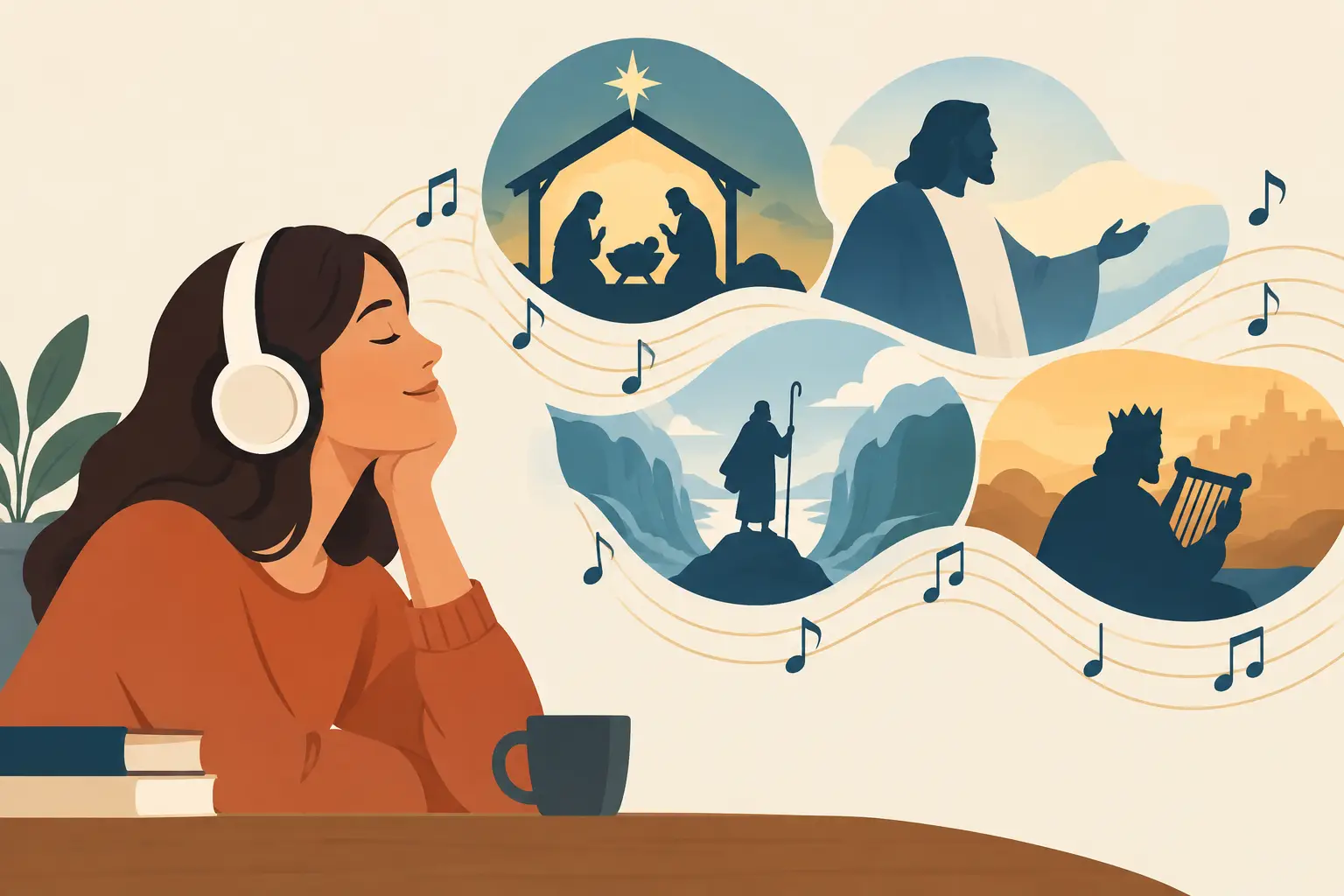
A child can forget a lesson before lunch and still sing its chorus at bedtime. That is part of the lasting strength of Bible stories set to music: a melody carries words farther than a spoken explanation sometimes can. For families, churches, and listeners who want faith-centered songs with real musical character, the goal is not simply to make Scripture catchy. It is to let truth take root in the memory and speak again when it is needed.
A song about David facing Goliath, Noah building the ark, or Jesus calming the storm can bring familiar scenes close. Guitar, rhythm, a clear vocal, and a well-chosen lyric can make the courage, fear, joy, and hope in these stories feel personal. The best Bible-based songs respect the weight of the story while giving listeners a reason to press play again.
Why Bible Stories Set to Music Work
Music gives a story shape. A verse can introduce the setting, a chorus can hold the central message, and a bridge can turn the listener toward response. That structure is especially helpful with Bible narratives because Scripture contains people facing decisions, doubts, danger, failure, mercy, and redemption. Those are not distant ideas. They are human experiences.
Think of Daniel in the lions’ den. The story has tension before it has triumph. Daniel is not brave because there is no risk. He remains faithful while the risk is real. A song that rushes straight to a cheerful ending may miss the point. One that lets the listener feel the nighttime uncertainty, then lands on God’s faithfulness, has room to say something deeper.
That is where songwriting matters. Strong Bible storytelling does not need to crowd every detail from a chapter into three minutes. It needs to choose a clear emotional and spiritual center. Noah’s story may become a song about obedience when the sky is clear. The prodigal son may become a song about coming home. The woman at the well may become a song about being fully known and still offered living water.
Music also serves memory. Repetition is not a shortcut when it is used with purpose. A repeated chorus can help children learn a key truth, while adults may return to that same line during a hard week. The words stay available when a Bible is not open, in the car, at work, around the kitchen table, or in the quiet after a difficult conversation.
A Song Should Serve the Story
There is a trade-off in any song drawn from Scripture. A writer has limited time, but the source material is rich and often complex. Simplifying is necessary. Oversimplifying is not.
A faithful song does not have to quote every verse word for word, but it should not reshape the meaning just to force a rhyme. If the song centers on Jonah, for example, it should not turn his story into a generic adventure about a big fish. Jonah is about running from God, confronting prejudice, receiving mercy, and learning that God’s compassion reaches farther than our own.
The same care matters when writing for children. Children deserve memorable songs, but they do not need watered-down faith. They can understand courage, forgiveness, kindness, prayer, and trust. They can also handle honest questions when the language is clear and the music invites them in.
A useful test for any Bible-based lyric is simple: does it lead people back toward the actual story? If a listener wants to open Scripture after hearing the song, the song is doing good work. If the song replaces the story with a vague message that could mean almost anything, it may need another look.
Keep the human stakes visible
Bible characters were not cardboard heroes. Peter was devoted and impulsive. Martha was serving and worried. Moses was called and reluctant. David trusted God and also made devastating choices. Songs become more honest when they allow that humanity to remain.
This is especially important for adult listeners. Faith-centered music does not have to pretend life is easy in order to be hopeful. Blues, country, rock, pop, worship, and Americana each have room for songs that acknowledge the struggle before pointing toward grace. A driving guitar part can carry resolve. A quieter acoustic performance can make space for prayer. The genre should serve the message, not cover it up.
From Scripture to a Singable Song
For writers, musicians, worship leaders, and parents creating music at home, the process begins with listening closely to the passage. Read it more than once. Notice the conflict, the turning point, the images, and the words that carry the heart of the scene.
Then choose one main idea. A song about the Exodus could focus on God making a way through what looks impossible. A song about the feeding of the five thousand could focus on bringing what little we have to Jesus. Trying to include every character, location, and lesson usually leaves a lyric crowded and a chorus unclear.
The chorus should be easy to remember without becoming empty. It might repeat God’s promise, name the response of faith, or state the story’s central truth in plain language. Verses can handle the details. The chorus gives the listener a place to stand.
Musically, contrast helps. A tense verse can reflect a wilderness, a storm, a prison cell, or a moment of waiting. A wider, more open chorus can express rescue, praise, or confidence. This does not require elaborate production. A good melody, a committed vocal, and a part played with conviction can carry a great deal.
At Capman Reign, original music is directed by the artist’s own vision, lyrics, and musical choices. That kind of creative ownership matters in Bible storytelling. The song needs more than a religious label. It needs an honest point of view, thoughtful writing, and a performance that sounds like someone means every word.
Different Listeners Need Different Doors In
Not every Bible story song has the same job. A children’s track may use simple phrasing, bright rhythm, and a chorus built for singing together. A worship-oriented song may linger over adoration and prayer. A rock or blues-influenced song may give a biblical struggle more grit and urgency. None of these approaches is automatically better. It depends on the listener, the story, and the purpose of the song.
Families often need songs that work beyond a single age group. The strongest ones give children something immediate to sing while offering parents lyrics with enough substance to discuss. A song about Zacchaeus, for instance, can be lively and fun without missing the transformation at the center of the story.
Church settings have their own considerations. A song intended for group singing needs a chorus people can learn quickly and lyrics that do not require a soloist’s range to carry them. A listening track has more freedom. It can use detailed verses, changing rhythms, and a more personal narrative voice.
For radio programmers, journalists, and music professionals, clarity matters too. A Bible-based song should make its purpose apparent without sounding like a sermon set over a backing track. Strong arrangement, solid recording, and a distinct vocal identity help the message reach beyond the already-convinced listener.
Let the Song Start a Conversation
The deepest value of Bible stories in song is not that listeners can recite a chorus. It is that the song can open a door. A child may ask why Joseph forgave his brothers. A parent may talk about what it means to trust God when plans change. A listener may recognize their own fear in the disciples’ storm or their own need for mercy in the prodigal’s return.
That is why these songs deserve care. They can be joyful, loud, tender, playful, reflective, and guitar-driven. They can belong in a family playlist, a worship set, a road trip, or a quiet moment at home. But their lasting power comes from telling the truth with enough heart that people want to hear it again.
Choose songs that honor the story, listen for lyrics that stay close to Scripture, and make room for the conversations that follow. A good melody may be the first thing remembered, but a faithful message can remain long after the music fades.
Leave a Reply